Tuesday, February 12, 2008

US compares 9/11 trials to Nuremberg


Hey... so I found this article about how some people want to use the death penalty on people associated with 9/11 and part of their argument is that the death penalty is legal and should be used like it was used in the Nuremberg trial.

Of course problems with this comparison is that the numbers of people murdered by the nazis was far greater than the current death toll due to 9/11 and so some people doubt whether that comparison is even valid... anyways... here's the article:

http://news.yahoo.com/s/ap/20080212/ap_on_go_pr_wh/sept_11_trials_nazis

Friday, February 1, 2008

President Bush's State of the Union Address


Hey all. Don't know if you're still reading this, but... I have some news. (well, you probably all heard it but... it's cool news.)


During Bush's State of the Union Address on Tuesday, he officially used the term "genocide" for the situation in Sudan. As we know from our experiences last semester, this means that the US has officially taken the initiative. We are responsible for stopping it. (or intervening in some way)


"America opposes genocide in Sudan. (Applause.) We support freedom in countries from Cuba and Zimbabwe to Belarus and Burma. (Applause.)" - President Bush's State of the Union Address, 2008.


-coe

Wednesday, January 30, 2008

Kenya


I don't know if anyone is still reading this, but I just read this short article about a new genocide that is beginning in Kenya. This "ethnic cleansing" began because of the recent elections in Kenya. Here is the link: http://www.guardian.co.uk/kenya/story/0,,2249481,00.html

Sunday, December 9, 2007

Memory and Legacy for Cambodia's Khmer Rouge


An article today in the SF Chronicle (Q&A About Cambodia Today) highlighted some interesting aspects of memory and legacy in the 1970s Khmer Rouge genocide. Andrew Ross, the Chronicle writer, visited Cambodia and wrote "For those who survived, witnessed the horrors and lost entire families, I was told, forgetting is more important than remembering"

He also observed that "there are those - the majority of Cambodians in 2007 were born after the Khmer Rouge - who, I was told, neither seek to know nor even believe what they are told." He is referring both to the children of victims and of perpetrators, though in the case of the Cambodian genocide, political groups were targeted rather than racial or religious ones so it is possible that a child could have both victims and perpetrators for relatives. According to a former U.S. ambassador to Cambodia, younger Cambodians ask "'why do you impose your pain on us?' They want to move on."

In H-block we had a very interesting discussion about the role of memory in society and identity. We had two conflicting arguments: one that focused on memory's positive role in preserving culture, establishing identity, and preventing, to some extent, horrible events such as genocide from being repeated. The other side focused more on the negative aspects: racism, prejudices, and negative classification and grouping.

My questions are:
1) Is memory a good thing? Does it help us survive and grant meaning to our lives, or does it leave us living in the past and prevent us from moving forward? What is the point of memory?
2) Why do you think many Cambodians today emphasize forgetting over remembering?
3) Many of the victims and descendants of victims of the Holocaust that were highlighted in class films and speakers talked about the importance of remembering, even if their memories were painful. Why, according to the article, is this not the case in Cambodia?
4) Anything else? The article was so pertinent to our class that it could not go unposted.

Gacaca courts in Rwanda

Hey everyone-
I know that this class is nearing its end, and that most of us are done with our don rags, but this article was just too perfect.

In the SF Chronicle Sunday paper, there is an article about the Gacaca courts in Rwanda that have been given the task of informally bringing justice to the hundreds of thousands accused of committing acts of genocide. Established in 2001, there still remain about 50,000 to be tried under Gacaca, and the Rwandan government wants to end the Gacaca system by the end of the month. With Rwanda's extreme overpopulation of the prison system (prisoners have an average of 17 inches of living space), and judges trying from 10-15 cases per day, the system is already swamped, and to finish in one month seems ridiculous. The article also brings up questions about the purpose and effectiveness of the courts. Because they are informal, there is no standard for punishment, and defendants can be sent to prison for flimsy reasons. Additionally, many claim that judges are susceptible to authorities. But others argue that the root of the Gacaca court is what matters- that what they are working towards is reconciliation between the two parties, not just establishing responsibility.

To spark some discussion-
-Do you think that the Gacaca courts' flaws are enough to bring them to a close? Or is the idea of informal justice worth more than the potential drawbacks?
-What should be done about the crowding of the prison system? Should justice be delayed to accommodate the huge number of criminals? Should prisoners be sent abroad?

Wednesday, December 5, 2007

Six Million Paper Clips


I don't know if many of you know this story, but it is simply amazing. Back in 1998 the small town of Whitwell, Tennessee began a project which included the collection of six million paper clips-- each one representing each Jew that was killed during the Holocaust. Whitwell is a very homogenous town consisting of an exclusively white an Christian population. The students at Whitwell Middle School had never really been exposed to the concept of diverstity and massacre. The school principal then decided that the students needed to learn about different experiences outside their sheltered town. Once two of the teachers started teaching about the Holocaust, the students were shocked and they wanted to know more. They wanted to know what the number six million actually means.To commemorate every killed Jew during the Holocaust, the school decided to embark on a project which entailed collecting six million paper clips. These students became so dedicated to the project, but it took so long that it spanned over many years. In the end, their project became known all around the world, even internationally. They collected a total of 29 milllion paperclips from people all around the world. Their project was so inspiring that they had thousands of people sending paperclips daily. The school was able to then track down a railcar that was used in the Holocaust. Eleven milllion paperclips (6 million for the Jews, 5 million for the gypsies, homosexuas, and other victims that were targeted) now rest in the this railcar outside Whitwell Middle School. This project changed the lives of many individuals and it shows how a simple idea, like collecting 6 million paperclips, can actually be carried out. Many participants claimed that this project changed their lives.

Here are some questions I have for you:
-First, how many of you knew about this?
-Does it surprise you that such a small community could make a project like this internationally known? What does this say about the power of the individual?
-Why are homogenous communities not always taught about a diversity of issues in school? How important is location to education?
-How is this project an example of memory and legacy?
-How do you think Holocaust survivors reacted to this project? Deniers?

I saw this movie about a week ago and it really helped me understand that many communities don't teach about global events such as the Holocaust. Since this population was all white Christian, they may not have felt the need to inform their kids about events such as the Holocaust that may have no personal relevance. Here in San Francisco and as a student at Lick, I have been exposed to the many world problems. Growing up in a city and having the ability to take a class like Genocide has really changed my world perspective. I encourage everyone to see this movie because it was really moving and made me think about my role as a student studying the Holocaust.

Here is the trailer:

Tuesday, December 4, 2007

The Nazi Hunter

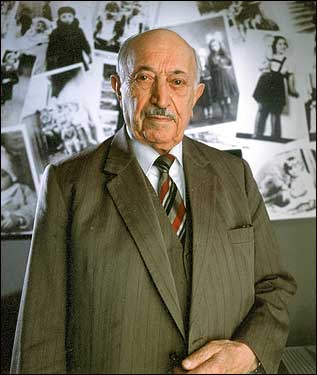
A week ago, in the class on transitional justice, Ms. Finn mentioned in passing Simon Wiesenthal (AKA the Nazi Hunter). Wiesenthal was an Austrian-Jewish architectural engineer and author. He died at the age of 96 in 2005.

After surviving the Holocaust, he dedicated his life to capturing fugitive Nazis so that they could be tried for war crimes and crimes against humanity. His goal, he said, was not vengeance but ensuring that Nazi crimes "are brought to light so the new generation knows about them, so it should not happen again."

Among his most famous captures is that of Karl Silberbauer, the Gestapo officer who arrested Anne Frank. Silberbauer's testimony discredited revisionist claims that The Diary of Anne Frank was a forgery.

Wiesenthal claims to have been instrumental in the capture of Adolf Eichmann, however, the Israeli Mossad (who actually captured Eichmann) say that Wiesenthal was not. Former Mossad chief Iser Harel said that Wiesenthal, "not only 'had no role whatsoever' in Eichmann's apprehension, but in fact had endangered the entire Eichmann operation and aborted the planned capture of Auschwitz doctor Josef Mengele."

Wiesenthal was certainly an upstander. Bringing perpetrators to justice in itself is amazing and his reasons for doing so is especially noble. He helped keep the spotlight on a hideous past he said too much of the world was disposed to forget.

"To young people here, I am the last," he once said, "I'm the one who can still speak. After me, it's history."

Despite suffering through the Holocaust, he emphasized that he did his work for "justice, not vengeance." How do you interpret this?

He also states that he is "not a hater." What do you think he means by this? Do you see any similarities between this statement and that of Marian Marzynski (who does not hate Germany because hate is the belief that something can't change; that progress doesn't exist)?

---
(I found this quote by Wiesenthal particularly funny. Once in Germany, someone accused him of dining on Nazis for breakfast, lunch, and dinner. Wiesenthal replied, "You are mistaken. I don't eat pork.")

Monday, December 3, 2007

Summary: Second to last Rotation (11/27 - 12/3)


This rotation, we continued exploring the themes of justice and remembrance in the aftermath of genocide.

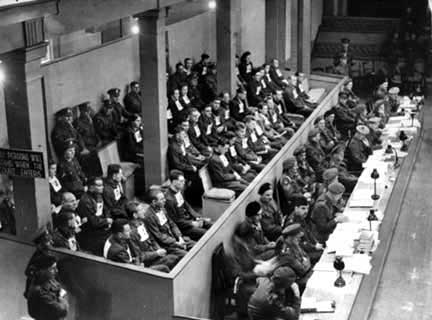
11/27: This class focused on the Nuremburg trials held after WWII. Some of the topics we discussed included Hannah Arendt’s reporting on Eichmann’s trial in Jerusalem and her thoughts on the “banality of evil.” We also talked about other ways of judging genocide, such as the Gacca in Rwanda and the TRC in South Africa, both of which force victims and perpetrators to interact. (The picture is Eichmann on trial)

11/29: We saw a video about a survivor of Dr. Mengele’s twin experiments who chose to forgive him. Check out Gaby’s post below for discussion about forgiveness.

12/3: First we discussed our homework readings and questions. Some ideas that came up: what a doctor should do if their oath to Hitler goes against their Hippocratic Oath, how much blame industrialists who used slave labor should have, and why some of those who worked in or with the Nazi regime were tried in domestic court systems and others were tried in international tribunals.

We then saw the video “A Jew Among Germans,” about Marian Marzynski’s journey back to Germany after surviving in the Warsaw ghettos, examining modern Germans attitudes towards the Holocaust. We’ll be watching more of it next class.

Patriotism Post-Genocide


Citizens in countries where genocide has occurred are often conflicted about showing patriotism due to the events that have happened in their country. An example of this is Germany, where it took over 60 years and a hosting a huge international event, the 2006 World Cup last summer, for many Germans to feel comfortable showing pride about being German. Most applauded this development, seeing it as a symbol of recovery for Germany.
Article link:
http://www.sfgate.com/cgi-bin/article.cgi?file=/chronicle/archive/2006/07/12/EDGOBIPUQ21.DTL
Discussion questions and ideas:

Do you think it is appropriate now for Germans to show patriotism? How much time has to pass after genocide for people to start feeling proud of their country again? Does any time have to pass?

Do you think people would be as willing to use Germany’s flag as a patriotic symbol today if the modern German flag were still the symbol of the Nazi party, or if the Nazis had kept and marched under the modern German flag?

Do you personally ever feel reluctant about showing patriotism because of the United States’ actions? Why or why not?

What do you think Marian Marzynski, the Holocaust survivor in the film today, would think about Germans displaying patriotism in daily life? During the World Cup?

The Holocaust Memorial in Berlin


Today we watched the movie, "A Jew Among the Germans," in which Marian Marzynski, a Holocaust survivor travels back to Germany. At the time the were searching for a design for a Holocauast Memorial in Berlin, they held contests more than once beofore they could find a winning design that they felt was appropriate.

Why do you think the first winning design, in which the names of the 6 million Jewish people who were killed in the Holocaust would be carved in granite, caused controversy, and was ultimately not used?

This is a quote from a site that presents great pictures of the memorial:

"The 19,000 square-meter Memorial for the murdered Jews of Europe, which was opened to the public on May 12, 2005, consists of 2711 stones placed on sloping, uneven ground in an undulating wave-like pattern, giving visitors the feeling of insecurity as though the stones were on unstable ground.

Visitors can enter from all four sides, day or night, and wander on their own through the maze of stones, as though visiting a graveyard with nameless tombstones. The columns are sunk into the ground to various depths and at some places, they are higher than the heads of the visitors. There are no set paths or sign posts to guide viewers. The memorial was designed by architect Peter Eisenman to deliberately disorient visitors by having all the stones tilted slightly and paths that are not level."

--> What was the point, do you think, of giving the visitors a feeling of insecurity while viewing the memorial?

I was also interesting to know if anyone has been to the memorial in Berlin, and how the experience was.

Link: http://www.scrapbookpages.com/Berlin2002/JewishMemorial/index.html

Sunday, December 2, 2007

Argentina and the CIA helping the Nazis?


After World War II, many Nazi leaders were brought to trial and punished for their crimes in war or crimes against humanity. Others, Joesf Mengele and Adolf Eichmann to name a few, escaped from persecution amidst the chaos in Europe during World War II’s conclusion. A popular destination for these fugitives was Argentina, were President Juan PerĂ³n, a pro-Axis Powers leader, and his government abided and protected the escaped Nazis. In 1958, the CIA learned the whereabouts of Adolf Eichmann, the Gestapo officer who oversaw the Final Solution, but decided not to pursue his arrest to protect important West German officials from possible revelations about their Nazi pasts. Not only did the CIA not pursue Eichmann’s arrest, they attempted to suppress the intelligence altogether. The CIA was determined to make sure Eichmann would not humiliate the West German government in the thick of the Cold War. Despite the CIA’s efforts, Israeli officials kidnapped, tried, and hanged Eichmann in 1962. Many other Nazi personal that fled to Argentina were found much later or even never found.

Should Argentinean government officials who protected and abided the Nazis escape trial be tried themselves in front of a world court? How severely should they be punished? What actual law did they break? How guilty is the CIA for suppressing the whereabouts of Eichmann to protect West Germany?

Thursday, November 29, 2007

Forgiveness


Today in class we focused on the idea of forgiveness. We watched a video about a holocaust survivor who chose to forgive her tormentor, the infamous Dr. Mengele. I was reading an article about a survivor of the Rwandan genocide who also decided to forgive the perpetrators. She describes witnessing the murder of her siblings, but states “now we are all Rwandans” referring to the separation between the Hutus and Tutsis. She and many others are now campaigning for forgiveness, so they can attempt to rebuild the country.
Article:
http://www.theage.com.au/articles/2004/03/15/1079199159803.html?from=storyrhs

Questions: Who has the right to forgive in cases of genocide? Victims? Bystanders? Courts?
What role does forgiveness play in terms of judgment and punishment? Why would anyone forgive?

Wednesday, November 28, 2007

"Vast Nazi Archive Opens to Public"

this is a really interesting article I found about a warehouse in Germany containing over 50 million documents which has just recently been opened to the public.

While many are relieved at the prospect of finally finding answers to their questions from such a haunting period in their lives, others believe this is something they have waited too long for.

Archive of war records in Bad Arolsen, Germany

Michael Probst, AP

Questions:
What do you think a development like this would mean to Holocaust survivors?
What kinds of obstacles would it present?
Do you think it would cause more harm than good?
What do you think people are hoping these documents will lead to?
Why do you think they have been kept locked up for so long?

Darfur in the SF Chronicle

I wanted to post the front page article form the "Insight" section of this past Sunday's San Francisco Chronicle. Since it was pretty hard to find amongst the post-Thanksgiving advertisements and coupons; some of you newspaper readers might have missed it. It provides basic information about the atrocities being committed, as well as the obstacles to peace efforts. Darfur has been of news lately in our blog as well as in the public domain and this is a good basis for a more educated understanding of a complex world problem.

ARTICLE URL: http://www.sfgate.com/cgi-bin/article.cgi?f=/c/a/2007/11/25/INGOTB4L1.DTL&hw=Darfur
+special+section&sn=001&sc=1000

There are also some great and striking pictures that appeared in the article, which as we have touched on a little might do such horrific events more justice than trying to express the "inexpressible" in words. You should check them out too.

A Few Thoughts On Justice

We've been talking a lot about Justice and Judgement recently, but what makes something a "crime?" There are numerous crimes that are considered so not because of the overt act, but because of the "victim's" perception of the act. For example, in some places it is legal to kill someone if they "want" to die, but illegal if they do not. But how accurate can justice be that is based on the victim's "feelings?" Can that be quantified? And does that mean that, if the overt act is irrelevent, whenever someone does something that someone doesn't like its a crime? Does anyone else see a problem with this? Does anyone have a better solution?

Has the Jury Reached A Verdict?


For serveral classes, we have been discussing the matter of responisiblity and the difference between a perpetrator and pawn. Yet only breifly have we discussed the jury - those who decide the fate and punishment of a perpetrator.
The Nuremberg trails were held to punish hundreds of high ranking Nazi officials involved in the Holocaust. Similar to the Versailles Treaty, the four allied powers (America, England, France, USSR) and winners of the war governed the trail without any neutral or axis influence (. Another case happened in South Africa where after a segregation law was dismantled, all those who felt vicimized by the law could tell their feelings and believes to the perpetrators of the legistlation. For participating, the perpetrators were given legal immunity, but as punishment had to listen and feel the emotion of thousands of victims (http://www.doj.gov.za/trc/legal/act9534.htm).
As you can see there are many ways to assemble a jury and jusdge a case. Ultimately, the jury is responsible for the outcome of the case, thus making the assembly process paramount in any trial. I'm curious to hear what you guys believe is the best solution to this problem... should it be the winners? the victims? switzerland? who should decide the fate of any war criminal?

Eichmann in Jerusalem

After learning about Hannah Arendt's book, Eichmann in Jerusalem, I searched for more info on the book, and found this site. It contains a review of the novel, and a general outline of Arendt's point. One paragraph that I found particularly interesting was this:

"Yet in documenting the results of Nazi efforts to rid other countries of Jews, she concludes that "under conditions of terror most people will comply but some people will not, just as the lesson of the countries to which the Final Solution was proposed is that ‘it could happen' in most places but it did not happen everywhere. Humanly speaking, no more is required, and no more can be reasonably asked, for this planet to remain a place fit for human habitation" (p. 233). We could take this as evidence that the only hope of preventing future catastrophes must lie in a morality that is inherent in human nature. On the other hand, Arendt considers Eichmann "terribly and terrifyingly normal" (p. 276). Eichmann in Jerusalem leaves us wondering not only if justice was achieved in Eichmann's case, but also whether the lessons Arendt believes the trial has taught will make a difference in the future."


Do you agree with her statement that it is only reasonable to ask some to resist in situations like Nazi Germany? Is acceptable that most will comply under conditions of terror? What can we reasonably expect of most human beings?

Also, can we "only hope" to prevent future catastrophes by placing our trust in "a morality that is inherent in human nature"? Why is there such a disconnect between this inherently human morality and Eichmann's terrifyingly normal presence and behavior?

CBS 5 Journalist Goes Inside Burma (Part I and II)

A CBS Journalist secretly visited Burma to cover these reports. There are two parts, together that are both 10 minutes. It's very interesting and worthwhile to check out in order to see what has been going on there and to learn a little bit more about Burma's current situation.


If this link doesn't work, go to www.cbs5.com and search for "Burma" or "Burma Video" the first two videos are the most recent.

Tuesday, November 27, 2007

Dr. Josef Mengele


Today in class we discussed responsibility. Who would be held responsible for war crimes and who would not. “The leaders of…” was the most common response. Ms. Finn pointed out a very controversial point, which is: should we hold a person accountable based on the numbers of deaths they’ve caused?
Could you hold a soldier accountable for the same war crimes as Eichmann?
Then she asked what types of “jobs” should be held accountable. The responses were again the leaders, of camps or parts of the Nazi government like the Hitler Youth.
I was researching Dr. Josef Mengele and I found this article.
Warning: semi-graphic
http://www.bbc.co.uk/dna/h2g2/A2875368
He performed extremely unethical and painful procedures on inmates. He also helped in the selection process of who went to the gas chambers after getting off the transport trains.

My question is should he also have been tried for war crimes? He said his work was in the name of science, and he was funded does that make him responsible or is that a form of taking orders?

He was also pursued by the Israeli secret service. Would it be “fair” to try him in an Israeli court instead of an international court? Should the victims pass the ultimate judgment?

Proximity to Genocide, "Us and Them," Hannah Arendt, "Good Samaritan" laws in relation to a Time Magazine article

The most recent issue of Time Magazine's cover reads, "What Makes Us Good/Evil." It discusses the difference between good and evil actions and why they are committed. This made me think about today's discussion about Hannah Arendt and her statement about the "banality of evil." This article states that "The notion of 'the other' is a tough one for Homo Sapiens. Sociobiology has been criticized as one of the most reductive of sciences, ascribing the behavior of all living things- humans included- as nothing more than an effort to get as many genes as possible into the next generation." Earlier the article had stated that there was "a time when the welfare of [one's] tribe was essential for your survival but the welfare of an opposing tribe was not - and might even be a threat." So, if sociobiologists are correct and this is all largely based on evolution (Are they? Is it? What do you think?), is the whole "us and them" mentality "banal"? Is a mentality able to be banal if the events that result form that mentality are far from banal? What do you think about Arendt's statement in general? Do you agree, disagree?
Another part of the article talked about proximity to someone in danger and how it relates to a person's perceived responsibility in helping that person. This question came up in class discussion today: Where is the line drawn for how close you have to be to a genocide in order to be held repsonsible for being a bystander? SHould bystanders in the US during the Holocaust (especially during the strict immigration policy) be held as responsible as bystanders in Germany? Why or why not? The article states that "Our species has a very conflicted sense of when we ought to help someone else and when we ought not, and the general rule is, Help those close to home and ignore those far away." So is that "general rule" human nature, wrong, both or neither?
One last thing the article talks about is a Good Samaritan Law in places like France which essentially makes it illegal to be a bystander to any event where another is in danger. The laws "require passerby to assist someone in peril." If David Cash had lived in France today he legally could have been convicted under this law. What do you think about this? Is this considered legislating morality? Is legislating morality ok? How can you tell which laws are legislating morality and which aren't?

(Also interesting is the morality quiz, a lot of these questions will be familiar from B&B but I thought it was still thought-provoking to see what percentage of people considered different options to be moral.)